


When the Sea Gets Noisy: Seismic Surveys, Marine Mammals, and the Environmental Cost of the Search for Oil and Gas
How do seismic surveys for oil and gas exploration affect dolphins and whales? What measures are being taken in Israel to minimize their impact - and how do long-term research and monitoring help protect our marine mammals?
The 'Ramform Tethys' is currently operating in Israel’s Exclusive Economic Zone (EEZ), conducting a marine seismic survey. The vessel tows 12 survey streamers, each approximately 6.5 nautical miles long, spanning a total width of about 1.5 nautical miles. Above the surface, only a single vessel is visible; below the surface, however, high-intensity acoustic activity is taking place in an environment where sound plays a critical role in the lives of marine animals.
For us at Delphis, this is an opportunity to explain what a seismic survey is, how it may affect dolphins and whales, what measures are in place in Israel to minimize potential harm - and what we are doing to improve the scientific knowledge that underpins the protection of marine mammals along Israel’s coastline.
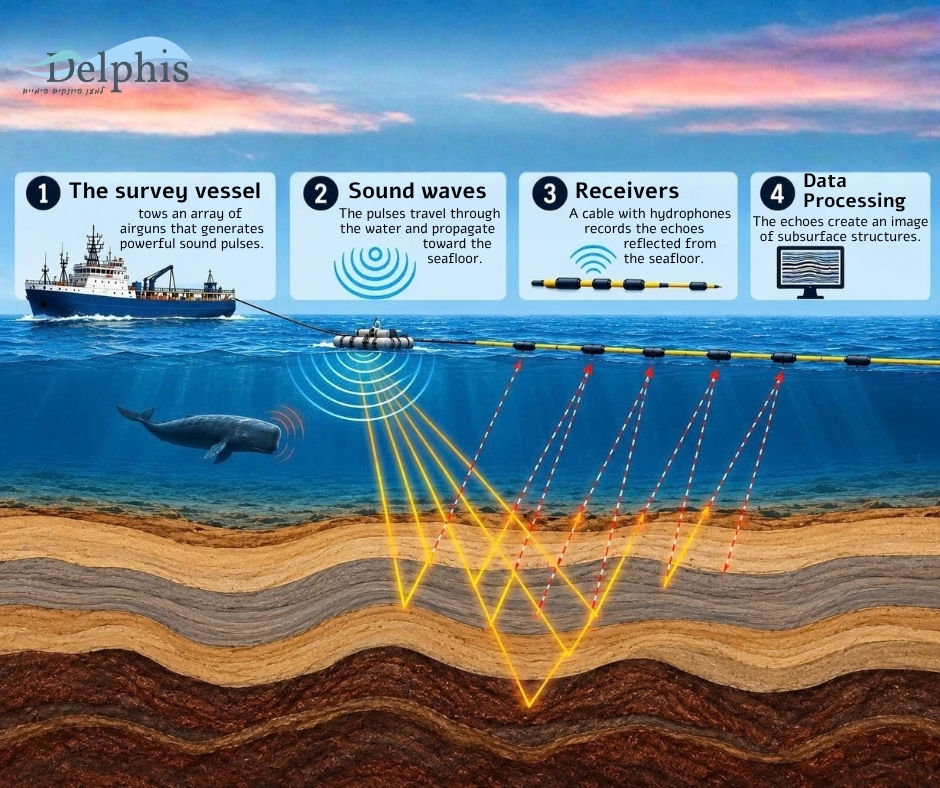
How Does a Seismic Survey Work?
Seismic surveys are used to map subsurface geological structures, including for the exploration and characterization of oil and gas reservoirs. To do this, arrays of airguns are used to generate powerful acoustic pressure waves.
These waves travel through the water, penetrate beneath the seafloor, and are reflected back from different geological layers. An array of sensors towed behind the vessel records the returning signals, allowing researchers to construct an image of geological structures deep beneath the seafloor.
However, the acoustic energy does not travel only toward the seabed. It also propagates throughout the marine environment - and this is where geological surveying intersects with the world of marine mammals.
For Dolphins and Whales, Sound Is Everything
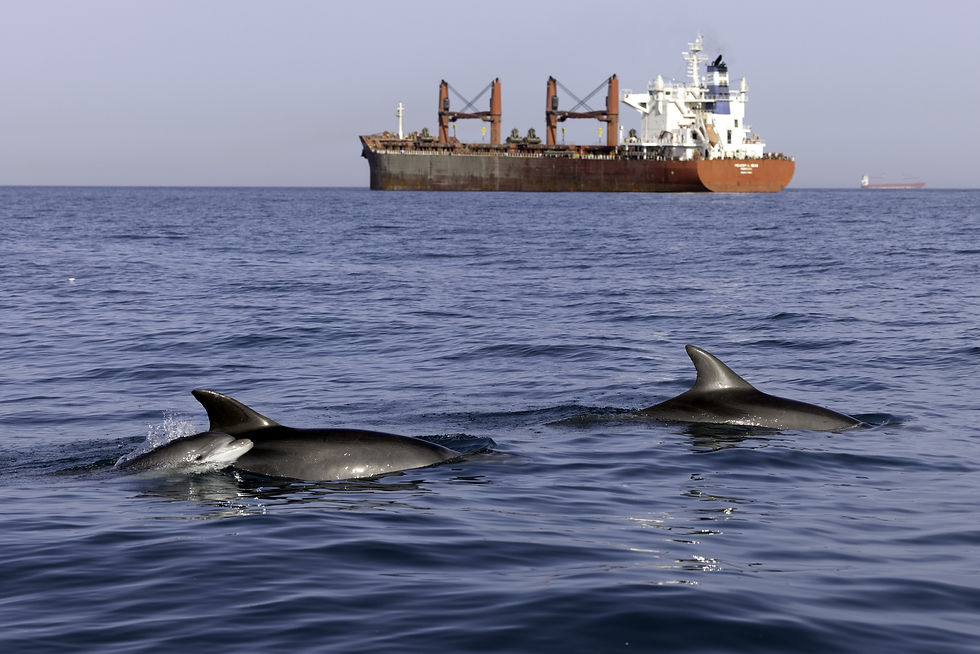
Underwater visibility is limited, which makes sound a primary means for marine mammals to communicate, navigate their surroundings, and locate food. In other words, the acoustic environment is an integral part of their habitat.
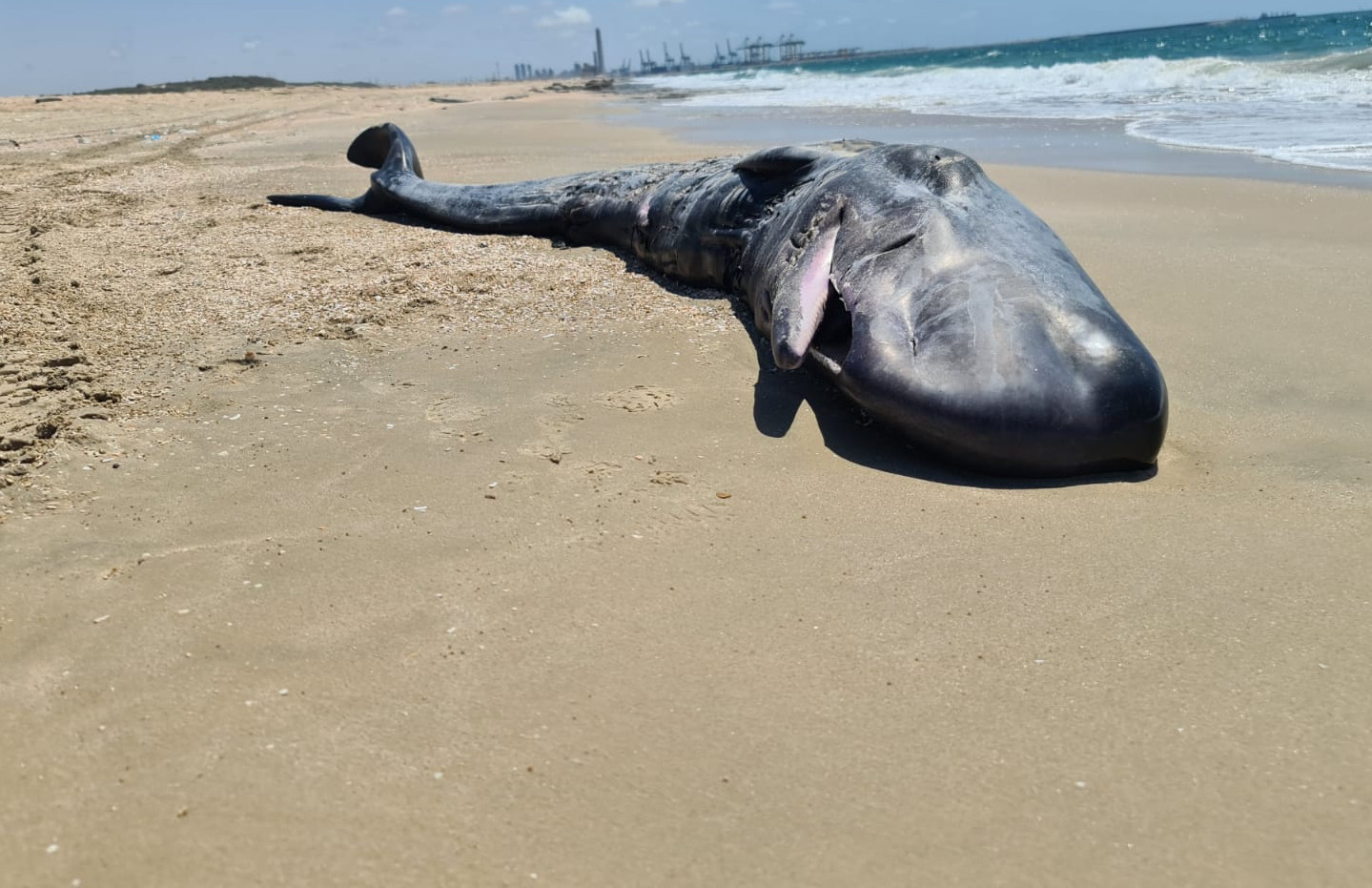
Exposure to intense underwater noise can affect marine animals in various ways, depending on sound intensity, duration of exposure, distance from the noise source, and other factors. At particularly high exposure levels, it can cause severe and irreversible injury and even death. At other levels, potential effects include damage to the auditory system, interference with communication and the ability to detect important acoustic signals, behavioral changes, and displacement from areas where the animals normally live, travel, or forage.
The question, therefore, is not only whether we are capable of conducting seismic surveys, but also how their impact on the ecosystems in which they take place can be minimized as much as possible.
What Is Being Done in Israel to Minimize the Impact?
Israel currently has advanced environmental guidelines designed to reduce the risk to marine mammals during seismic survey operations. These include establishing an exclusion zone around the noise source, conducting pre-survey observations to detect animals in the area, gradually ramping up the airgun array, deploying marine mammal observers, and, under certain conditions, using passive acoustic monitoring. Seasonal and spatial restrictions are also in place.
These are important mitigation measures that can reduce animals’ direct exposure to high noise levels, among other things by detecting them and ensuring that seismic operations do not proceed while they are within the designated exclusion zone. However, these measures do not eliminate underwater noise or completely prevent its effects.
Israel currently applies a fixed 500-meter exclusion zone. In some other countries, larger zones are used in certain circumstances - for example, 1,000 meters in Australia and 1,500 meters in New Zealand - alongside additional tools such as site-specific acoustic modeling and quantitative noise thresholds. Airguns can, of course, be heard well beyond the 500-meter boundary, and under certain conditions, effects on marine mammals may also occur beyond this range.
To Protect Marine Mammals, We First Need to Know Where They Are
One of the key tools for reducing potential harm is Israel’s marine mammal sensitivity map. The more accurate and up-to-date our knowledge of dolphin and whale distribution is, the better we can identify areas where potentially disruptive human activities require particular attention.
Since 2022, Dr. Aviad Scheinin, Head of the Apex Predator Program at the Morris Kahn Marine Research Station and Co-CEO of Delphis, together with Yali Mevorach, a bioacoustician and researcher at the station, have led a research project focusing on deep-sea cetaceans. The project aims to map the distribution of these species within Israel’s Exclusive Economic Zone (EEZ), thereby helping to update the marine mammal sensitivity map. As part of the project, acoustic surveys are conducted off the Israeli coast under the leadership of the University of Haifa. The surveys were initially funded by Greenpeace and were later funded by Israel’s Ministry of Energy, with researchers and volunteers from Delphis taking part.
During the research cruises, visual observations of marine mammals are conducted alongside acoustic detection and localization. The data collected - including where animals are observed or acoustically detected and which areas they use - contribute to the ongoing refinement of the sensitivity map.
This work has direct practical applications: the findings help identify areas that require special consideration before seismic surveys or other potentially disruptive activities are carried out. In this way, marine research and monitoring do not end with scientific publications; they become tools that support environmental decision-making and help reduce risks to marine mammals.
The collaboration between Kadas Nexus - the Morris Kahn Marine Research Station at the University of Haifa and Delphis brings together academic research, long-term fieldwork, and the involvement of researchers and volunteers - all with the aim of continually improving our understanding of the marine mammals that live in or pass through Israel’s marine environment.
Reducing the Impact - While Also Asking How It Can Be Prevented
From Delphis’ perspective, improving guidelines, expanding scientific knowledge, and monitoring marine mammals are essential steps as long as seismic surveys continue to be conducted. But it is equally important to state a simpler point: the most effective way to reduce the risks associated with seismic activity is to reduce the need for it in the first place.
The Mediterranean Sea is far more than a potential reservoir of energy resources. It is a complex and sensitive habitat, home to dolphins, whales, sea turtles, and countless other species. Alongside the measures currently needed to minimize harm to these animals, we must also look ahead. Delphis’ position is that Israel should reduce its dependence on fossil fuels and accelerate the transition to renewable energy, so that the need to explore for and develop new oil and gas reserves steadily declines.
Until then, we will continue to conduct research, monitor marine mammals, update our knowledge, and work to ensure that their protection is taken into account before significant human activities are carried out at sea.
Because sometimes, the best way to reduce noise is simply not to create it in the first place.

Notice of the seismic surveys being conducted in our region, in the western part of Israel’s Exclusive Economic Zone (EEZ):
At Delphis, we work to advance marine mammal research, conservation, and public awareness in Israel. Through scientific research, public education, and collaboration with marine communities, we can all play a role in creating a safer environment for whales and dolphins.
One of the best ways to help protect marine mammal populations along Israel’s coast is to report sightings. Have you spotted a seal or any other marine mammal? Keep your distance, take a photo, and report the sighting to us.

Comments